

Building Compassion into Complex Systems: Garland School of Social Work Alum’s Journey in Medical Social Work
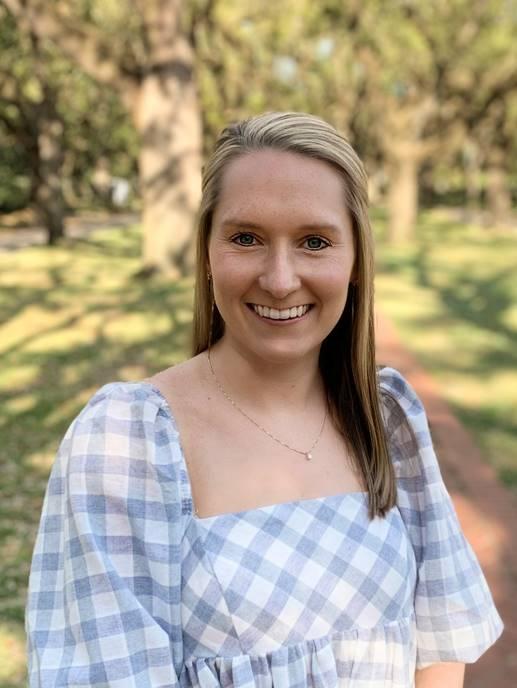
Blair Alger Belchic didn't just inherit a Baylor legacy: she inherited a calling to serve. Growing up in a family where all four of her mother's siblings attended Baylor, and with a grandmother who worked as a school counselor, the seeds of social work were planted early on in her life. But it wasn't until her mother suggested she explore the field that Blair discovered her true path.
"I always thought I would be a teacher because I loved working with kids," Blair said. "But my mom encouraged me to [explore a degree in social work]. When I looked into the profession, I loved the idea of being able to work in different settings—in a school, at an agency or in a hospital."
That versatility has defined Blair's career. After graduating from Baylor with her BSW in 2015 and her MSW in 2016 (through the advanced standing program), she turned her internship at Texas Children's Hospital into a decade-long career that has touched countless lives.
From Patient Care to Leadership
During her first eight years at Texas Children's, Blair worked in chronic care with patients who have cystic fibrosis, building deep relationships with families she saw on a regular basis. But her work extended beyond individual patient care. Through grants from the Cystic Fibrosis (CF) Foundation, she partnered with CF centers in Mexico City and Monterrey to improve their outcomes and processes—a challenging but rewarding macro-level project that opened her eyes to healthcare disparities.
Closer to home, Blair spearheaded the creation of a food pantry in her clinic, addressing food insecurity among her patient population. The project grew directly from her MSW capstone presentation on food pharmacies in healthcare settings—a powerful example of translating classroom learning into real-world impact.
About two years ago, Blair was promoted to a clinical specialist position, where she now splits her time between patient care and leadership responsibilities. She oversees the onboarding and training of new social workers across the hospital, which employs approximately 120 social workers across various units and shifts.
"I desperately miss my direct patient care most days," she admitted. "But it was an opportunity to move up and make a broader impact."
The Complex, Rewarding Work of Social Work
When people hear that Blair is a social worker, they often say she "just helps so many people." But the reality is far more complex, as she is quick to point out.
"I wish people understood more about the depth and complexity of social work," she said. "It takes a lot of skill and critical thinking and emotional intelligence. We're navigating these complex systems and making sure that vulnerable individuals aren't falling through the cracks, that they're still showing up to appointments even though they have all of these barriers."
Blair described the "invisible weight" that social workers can carry: showing up with compassion during families' hardest moments, tirelessly advocating for others and managing crisis situations, all while maintaining professional boundaries and their own mental health.
Caring for the Youngest Among Us
One of the most pressing needs Blair witnesses daily is the pediatric mental health crisis. As someone who provides on-call support to emergency center social workers, she's seen the demand skyrocket in recent years.
"When I started here, we maybe had a couple behavioral health cases in our emergency center every week," she noted. "Now it's more like dozens a day."
The age of patients presenting with significant mental health concerns is dropping dramatically—from adolescent years to elementary school age—and the pandemic accelerated this crisis that continues today. For Blair, addressing this is about more than immediate intervention.
"Obviously stronger and healthier children will grow into stronger and healthier adults," she said. "But until we can figure out how to ensure that our children are healthy, it will continue to be difficult for our communities to recover and be healthy."
The Power of Presence
Each day, Blair continues to show up her for community because she knows the impact social workers bring to healthcare. And she has some advice for aspiring medical social workers that is equally practical and profound.
"Be ready to sit with people in their pain on their darkest day and advocate when everyone else has given up on them," she said. "But also—and this took me years to figure out—set boundaries early and prioritize your own mental health. You can't pour from an empty cup."
She encourages new social workers to remember something she tells her trainees regularly: "Never underestimate the power of our presence. Even though we don't have the perfect solution or the perfect answer, just showing up with compassion and a sense of calmness can make all the difference in the world."
The Baylor Difference
Blair credits her Garland School of Social Work education with preparing her well for the complexities of medical social work. She particularly valued the practicum class, where she learned not just from her own internship experience but from classmates at other placement sites.
"I had an intern once from another school who told me they didn't have a practicum class where they could discuss cases together," she said (surprised). "I didn't know that wasn't common."
Her colleague at Texas Children's, who didn't attend Baylor, often tells Blair that she loves working with Baylor interns, and it shows.
"I'm not biased," Blair joked, "but our Baylor interns always shine!"
The connection to her own internship supervisor remains strong even today. Though her mentor has retired after more than 20 years in the social work profession, the two still meet monthly.
"Finding your people and your support is incredibly important," Blair emphasized.
Moving Forward with Hope
Today, Blair balances her clinical work with improving training programs and supporting the next generation of social workers. She's working to digitize orientation materials and constantly seeking ways to make processes more efficient and sustainable.
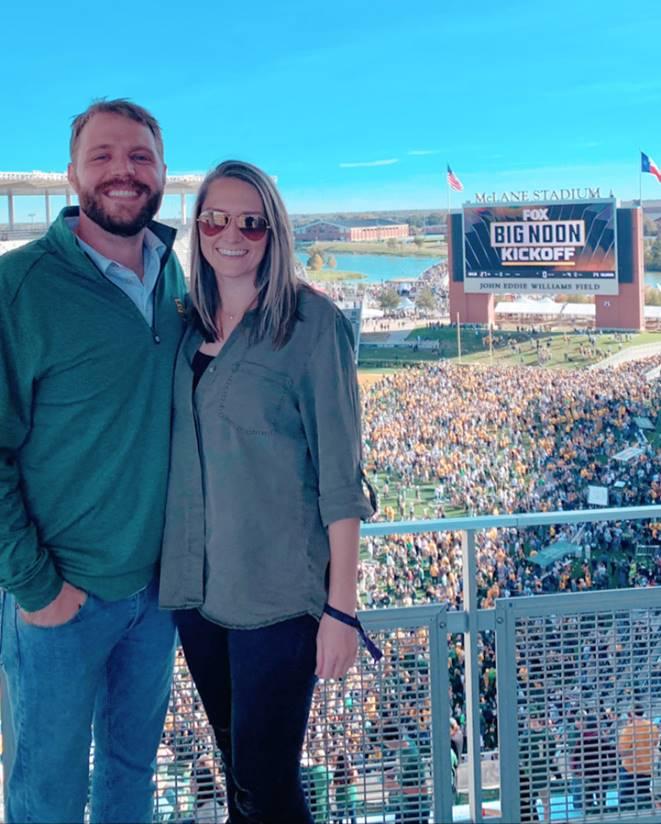
Outside of work, she stays active through running, working out and playing sand volleyball. She recently married and bought her first house, where she anticipates her hobbies will include home improvement projects and yard work. Her grandfather, who passed away two years ago, would be proud to know that her husband has taken up his hobby of following every aspect of Baylor athletics.
When asked what keeps her going each day, Blair returned to the core of why she chose this profession: "As long as I continue to feel like we're bringing value and that our work matters, that’ll keep me going."
For students considering medical social work after graduation, her message is clear: Be persistent and don’t get discouraged, even if you don’t get your dream job right after school.
“This field is constantly changing and evolving, and there are always career opportunities for those who are ready to do the work," she added.
It is advice rooted in a decade of experience navigating complex systems, advocating for vulnerable populations and showing up with care and compassion.
Sic ‘em, Blair! Keep showing up and making a difference.
Think you might be interested in a master's degree in social work? Reach out to our Admissions Team to learn how to begin that process. We stand ready to come alongside you on your educational journey!