

From Garden to Community: A New Eco Social Work Practicum Model at Da’Shack
Eco social work internship partnerships cultivate innovative approaches to community engagement, environmental stewardship, and holistic well-being
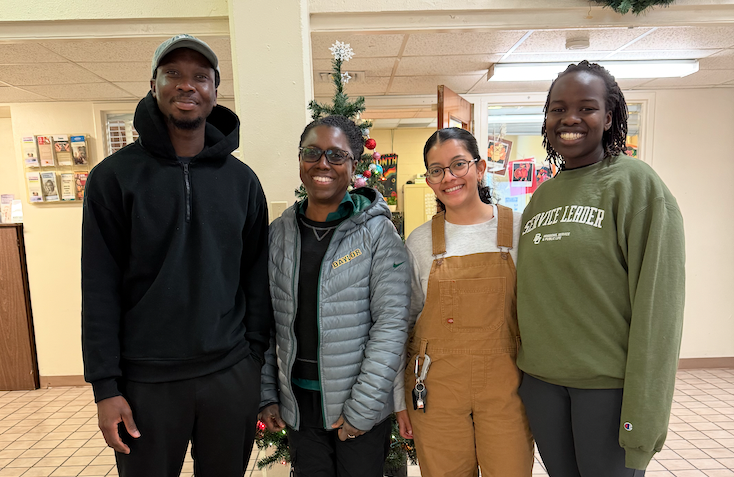
MSW students Moyosore Adebanjo, Anushka Jain, and Revina Karani pose for a picture at Da'Shack, their internship site, with Dr. Stephanie Boddie, the Fuller Family Endowed Chair for Social Justice at the Garland School of Social Work.
For several years, Dr. Donna Nickerson, owner of Da’Shack Farmer’s Market Health, and Wellness, Inc., has partnered with the Diana R. Garland School of Social Work at Baylor University to cultivate innovative approaches to community engagement, environmental stewardship, and holistic well-being. In 2023, Da’Shack became a member of the S.C.R.A.P. Collective, further strengthening its commitment to sustainability, education, food justice, and collaborative community impact across Waco. What began as classroom collaboration through guest lectures in courses such as Dr. Stephanie Boddie’s “Education from a Gardener’s Perspective” evolved this year into a formal practicum partnership designed to prepare students for community-centered and ecologically informed social work practice. Dr. Boddie served as the task supervisor in launching the practicum site and helping to shape the learning environment.
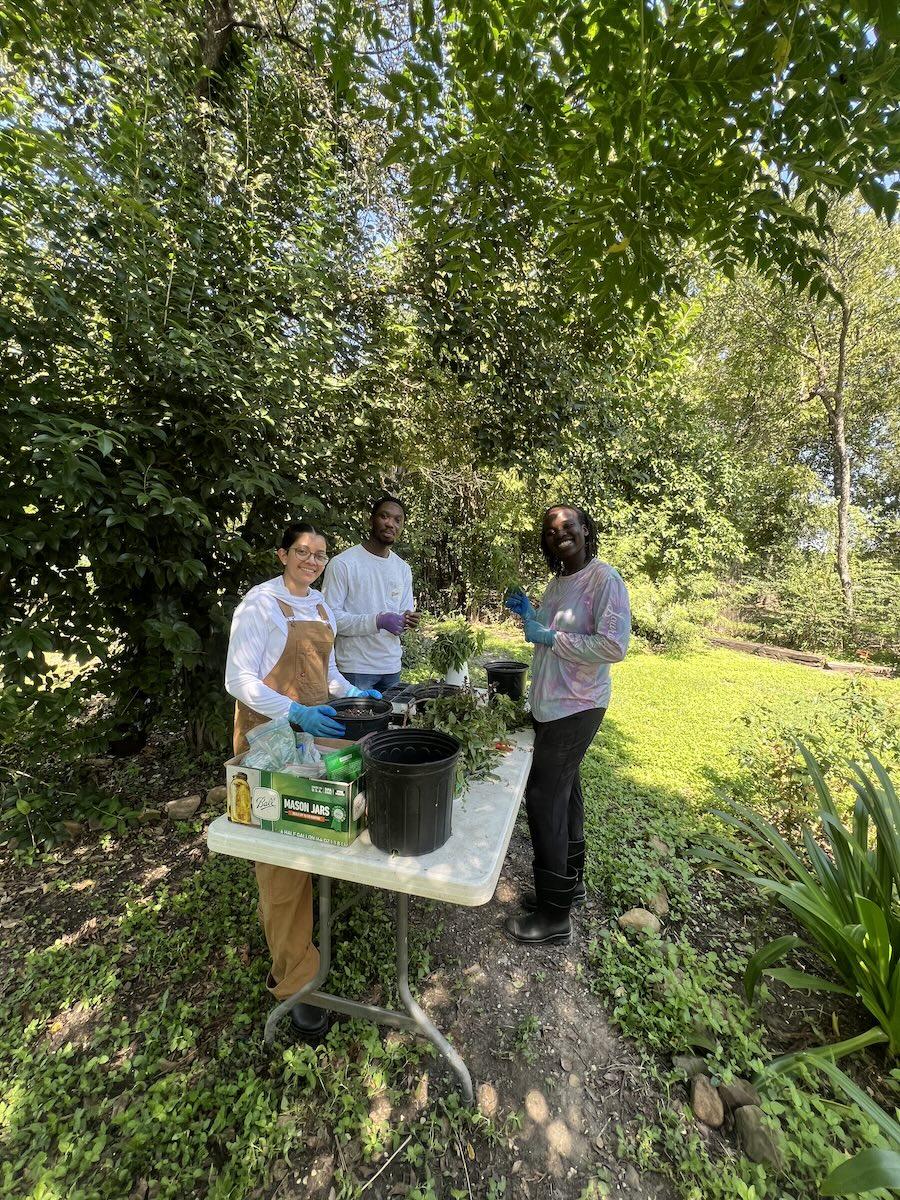
Through this inaugural practicum, three generalist social work students—Anushka Jain, Moyosore Adebanjo, and Revina Karani—became the first cohort to complete a practicum at Da’Shack. Their experience demonstrated how community-based sites rooted in food, land, and wellness can serve as transformative learning environments for future social workers.
At Da’Shack, students gained hands-on experience in Earth-kind gardening practices, composting, sustainable food systems, and relational community-building strategies. More importantly, they learned how gardening and environmental engagement can function as tools for healing, empowerment, education, and public health promotion. The practicum emphasized that social work is not confined to traditional office settings; it can also take place in gardens, neighborhoods, schools, churches, and shared community spaces where relationships are cultivated alongside food and hope.
In an era marked by rising food insecurity, environmental challenges, social isolation, and mental health concerns, sites like Da’Shack provide a living laboratory for innovative social work education. They prepare students to become practitioners who not only respond to crises, but also help cultivate healthier ecosystems, stronger relationships, and more resilient communities from the ground up.
Students applied these practices across multiple community contexts, including Lake Air Montessori, Hillcrest Elementary School, Toliver Chapel, Greater New Light, and Kate Ross Public Housing. In these settings, students engaged children, families, older adults, and congregational communities through gardening education, composting initiatives, wellness conversations, and collaborative activities that strengthened relationships.
The value of a practicum site like Da’Shack offers students an opportunity to witness how environmental justice, food access, health, mental health, spirituality, and community resilience intersect in everyday life. The site models an asset-based approach to social work by recognizing community wisdom, cultural knowledge, and local leadership as essential resources for collective flourishing. It also equips students to think interdisciplinarily by bridging health, sustainability, and education, with social work.
In an era marked by rising food insecurity, environmental challenges, social isolation, and mental health concerns, sites like Da’Shack provide a living laboratory for innovative social work education. They prepare students to become practitioners who not only respond to crises, but also help cultivate healthier ecosystems, stronger relationships, and more resilient communities from the ground up. This internship is part of the “eco social work” movement with a uniquely distinct set of partnerships spanning public housing, schools, congregations, composting initiatives, and community gardening within a formal social work structure.