

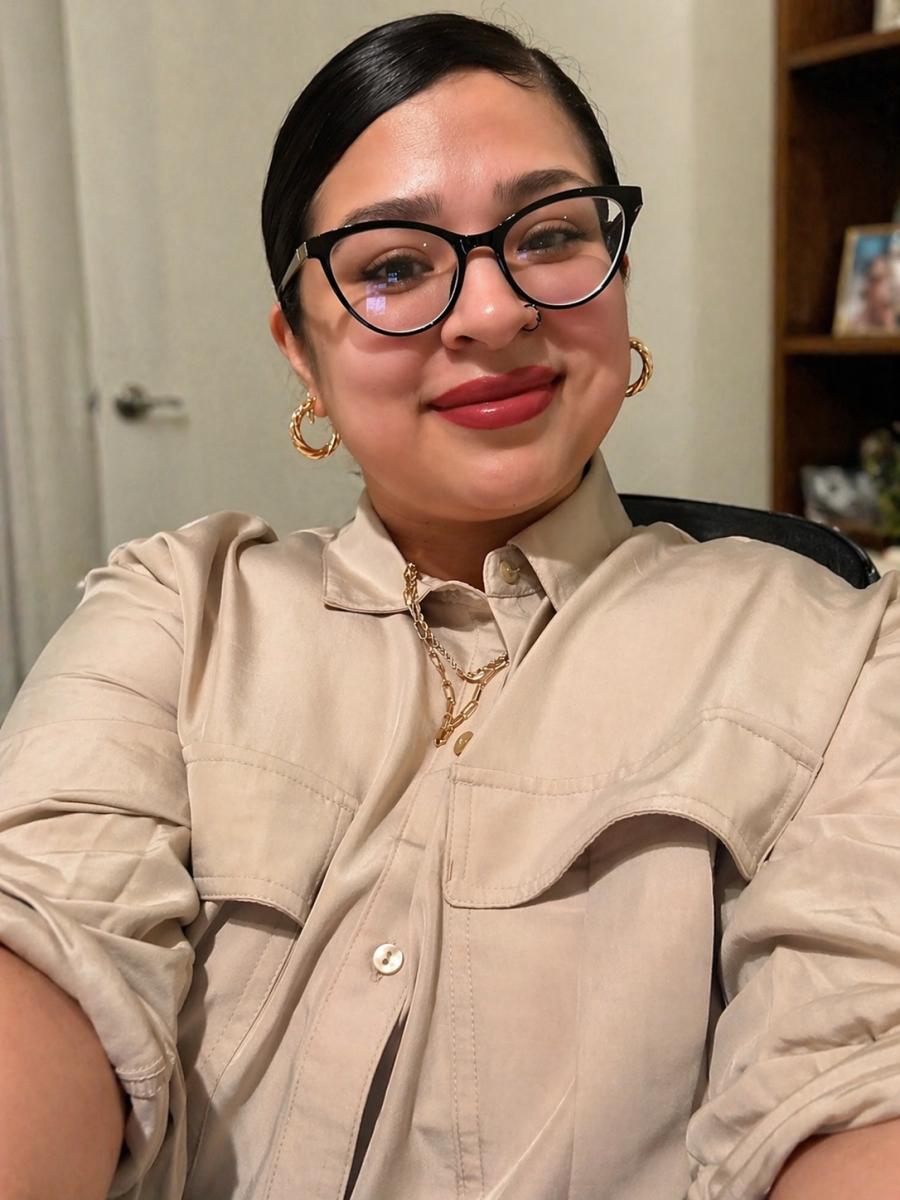
2026 BSW Spirit of Social Work Award Recipient: Antonianett Garcia
Tell us a bit about yourself.
I am from Waco, Texas, born and raised. I come from a family of Mexican immigrants and am a first-generation college student. I recently graduated from Baylor University with my Bachelor of Social Work and will be continuing my education in Baylor's Master of Social Work program. I will also be serving as a student intern with the Central Texas Veterans Health Care System in Suicide Prevention.
I am a wife, a mother of six children, and a grandmother to a grandson whom I have helped raise and support. My family has always been my greatest source of motivation. Every step of my educational journey has been about creating opportunities not only for myself, but for the generations that come after me.
I am the first person in my family to attend Baylor University and the first to pursue a degree in social work. Being a first-generation college student has made this journey especially meaningful to me because I did not have a roadmap from family members who had gone through the experience before me.
What one word could be used to describe you?
Resilient.
Life has presented many challenges, and it has not always been easy. For much of my life, I felt like I was surviving rather than truly living. The obstacles I have faced shaped who I am, but they also made me stronger. They taught me perseverance, determination, and compassion for others. Because of my experiences, I can genuinely connect with people who are struggling and remind them that difficult circumstances do not define their future.
Do you have a mantra you live your life by?
One phrase I often remind myself of is, "Surviving isn't living."
For a long time, I focused on simply making it through each day. That mindset helped me endure difficult seasons, but eventually I realized there is a difference between surviving and truly living. This reminder encourages me to pursue my goals, embrace opportunities, and believe that my dreams are possible. It reminds me not to settle for survival when a full and meaningful life is possible.
Why did you choose social work?
I often say that social work chose me. Growing up, I experienced firsthand how systems can impact people's lives. My family faced many challenges, including poverty, addiction, and the stigma that often comes with being part of an immigrant family. My mother struggled with addiction, and there were times when I felt like there was nowhere to turn and no one who truly understood what we were going through.
Those experiences shaped me. I know what it feels like to need support and not know where to find it. I know what it feels like to feel unseen.
That is why I chose social work. I want to be the person for others that I sometimes needed when I was younger. I want people to know that they matter, that resources exist, and that their circumstances do not have to determine their future.
What led you to Baylor Social Work?
My decision to attend Baylor was deeply personal. When I was a child, I lived in Parkside Apartments, a low-income housing community in Waco that has since been demolished. I remember Baylor students coming to visit us. They would take us across the street to Dewey Park, spend time with us, provide activities, share their faith, and sometimes provide snacks and encouragement.
As a child, those visits meant more than they probably realized. Some of those interactions were among the most positive experiences I had during that time in my life. I remember thinking, "One day, I want to be a Baylor student just like them."
At the time, that dream felt impossible. Yet years later, I found myself walking the same campus that once seemed so far away. Attending Baylor has been a full-circle moment and a reminder that God can bring dreams to life in ways we never expect.
Tell us about the needs you see around you and why you are called to meet those needs.
Growing up in Waco and remaining connected to my community has allowed me to see many unmet needs firsthand. I see barriers related to education, housing, food insecurity, utility assistance, mental health care, and access to resources. I see families who are working hard but still struggling to get ahead. I see students who need encouragement and guidance. I see individuals facing mental health challenges who need support and understanding. Because many of these issues have touched my own life, I feel called to help address them. I believe everyone deserves dignity, support, and the opportunity to thrive
Have you been involved in Baylor organizations while working on your Bachelor of Social Work degree (BSW)?
I have been actively involved with Baylor First in Line and Trailblazers through Multicultural Affairs. These organizations have provided opportunities to support students, build community, and help bridge gaps for first-generation and underrepresented students. I was honored to receive the Distinguished Leadership First in Line Scholarship Award, among other recognitions during my time at Baylor.
What was your favorite social work course and why?
My favorite course was Trauma, Loss, and Mourning. This course came into my life during a season when I needed it most. While I was taking the class, my grandmother, the woman who raised me and whom I considered my mother, was nearing the end of her life. The knowledge, perspective, and support I gained through that course helped me navigate one of the most difficult experiences I have ever faced. It taught me about grief, healing, and resilience in a way that was both personal and professional. I will always be grateful for that experience.
What are most proud of and why?
I am most proud of becoming the person I am today. I was once an eighth-grade dropout. Statistics suggested that someone with my background would face significant barriers to higher education. Yet at 33 years old, I found myself attending the university I had dreamed about as a child. Sometimes I still look around and wonder how I got here. But I did get here. And that reminds me that our past does not determine our future.
Have you faced obstacles to entering or since entering college? How did you overcome these obstacles?
Yes. I have faced many obstacles throughout my educational journey. One of the most difficult was losing my grandmother while I was in school. She was the person who raised me and one of the most important people in my life. I also faced financial hardships, family responsibilities, and many of the challenges that first-generation students often encounter.
Baylor became part of my support system. I encountered professors, mentors, staff members, and friends who encouraged me, prayed for me, sat with me in difficult moments, and helped me access resources when I needed them. Their support helped me continue moving forward even when things felt overwhelming.
Tell us about your undergraduate social work internship experience.
I completed my BSW internship with Baylor First in Line, where I worked with FILSA Academy students and first-generation college students. My role focused on helping students navigate resources, develop confidence, and feel supported in their educational journey. This experience gave me the opportunity to support students in a space that closely reflects my own journey.
What are your plans after graduation?
I am pursuing my Master of Social Work at Baylor with a clinical specialization. I am also interested in the Integrated Behavioral Health Program and hope to continue developing my clinical skills through opportunities like that. After earning my MSW, I hope to obtain my LCSW and continue serving individuals and communities through clinical social work practice. I am especially interested in mental health, immigrant communities, and supporting individuals who face barriers like those I experienced growing up.
Any advice for those coming after you?
Do not underestimate your ability to succeed. There will be moments when you question whether you belong, whether your dreams are realistic, or whether the obstacles are too great. Keep going anyway. Your dreams are not far-fetched. They can become your reality.
Most importantly, remember to live. Don't spend your whole life just surviving the day. Believe that something more is possible for you, because it is.
What others say about Antonianett:
"Antonianett did not take the traditional route to higher ed or to the Garland School of Social Work. She has fought for her education and persevered through trial after trial in order to reach this achievement. She embodies the values of social work and is authentic in the way she approaches learning. She calls out the contradictions, challenges us all to look at the intersection of systemic injustice with personal struggle, and makes social work relevant beyond the simplicity of being a 'helping profession.' She welcomes and builds community wherever she goes and is quick to give credit to those whose support has changed her life while carrying that positive change forward for the benefit of others."