

Garland School Faculty Connect Research and Community at Dallas Chinese Community Center Health Fair
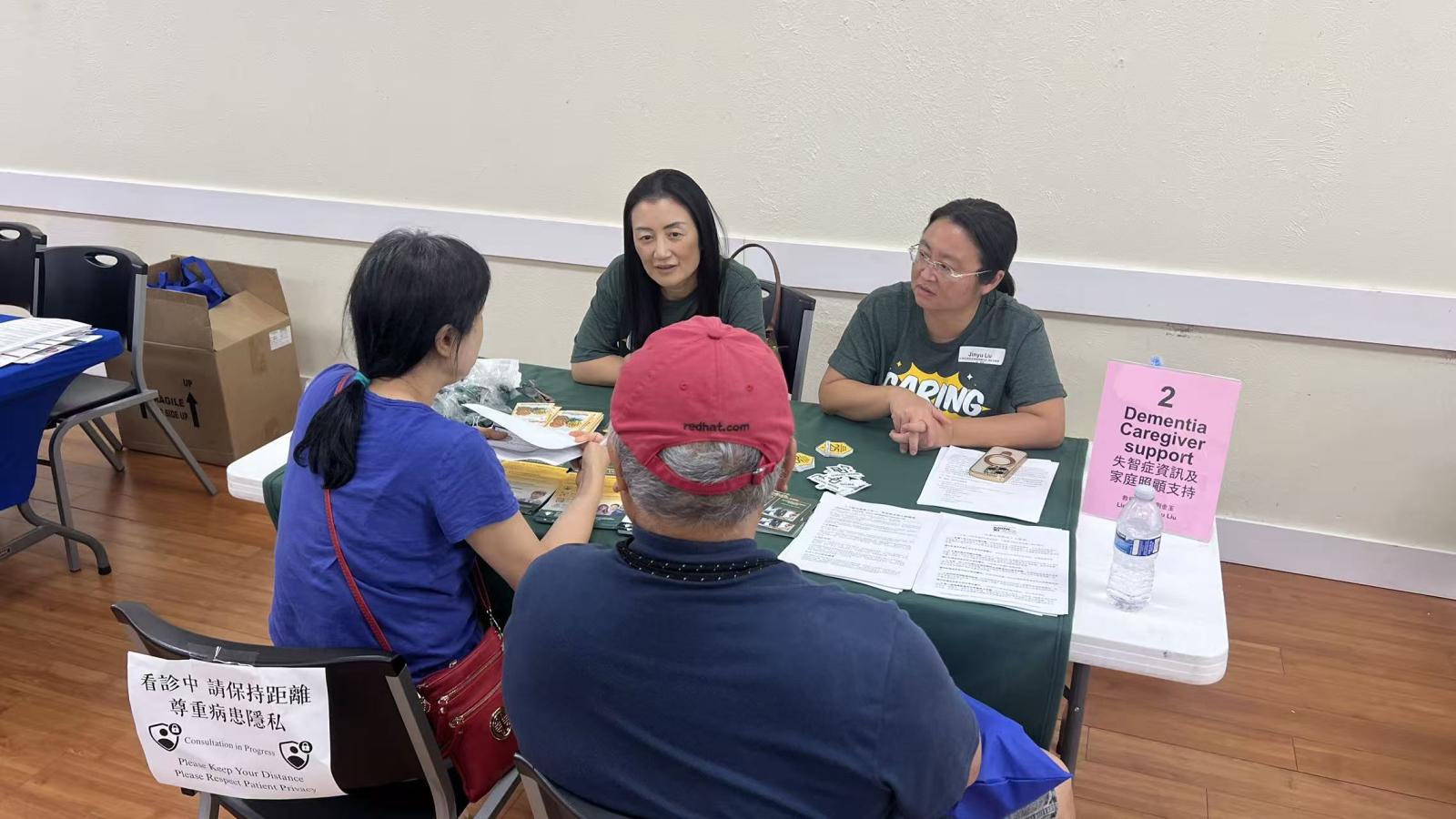
At the heart of the Garland School of Social Work at Baylor University is a commitment to serving others and preparing social workers to be culturally responsive and understand individuals within the context of their families, cultures and communities. For Dr. Ling Xu and Dr. Jinyu Liu, this mission extends beyond the classroom and research setting through an ongoing partnership with the Dallas Chinese Community Center (DCCC) and its Annual Health Fair.
Xu and Liu—researchers who had built their careers at different institutions—first knew of each other through their professional networks and a shared academic focus on gerontology. Their common research interests led them to co-author several academic papers from their respective universities, but it was at Baylor, however, that their paths came together and their acquaintance grew into a partnership. After Liu joined the university, the two began collaborating on research focused on older adults and family caregivers. While their academic interests naturally intersect, their partnership is rooted in a mutual commitment to serving the Chinese American community.
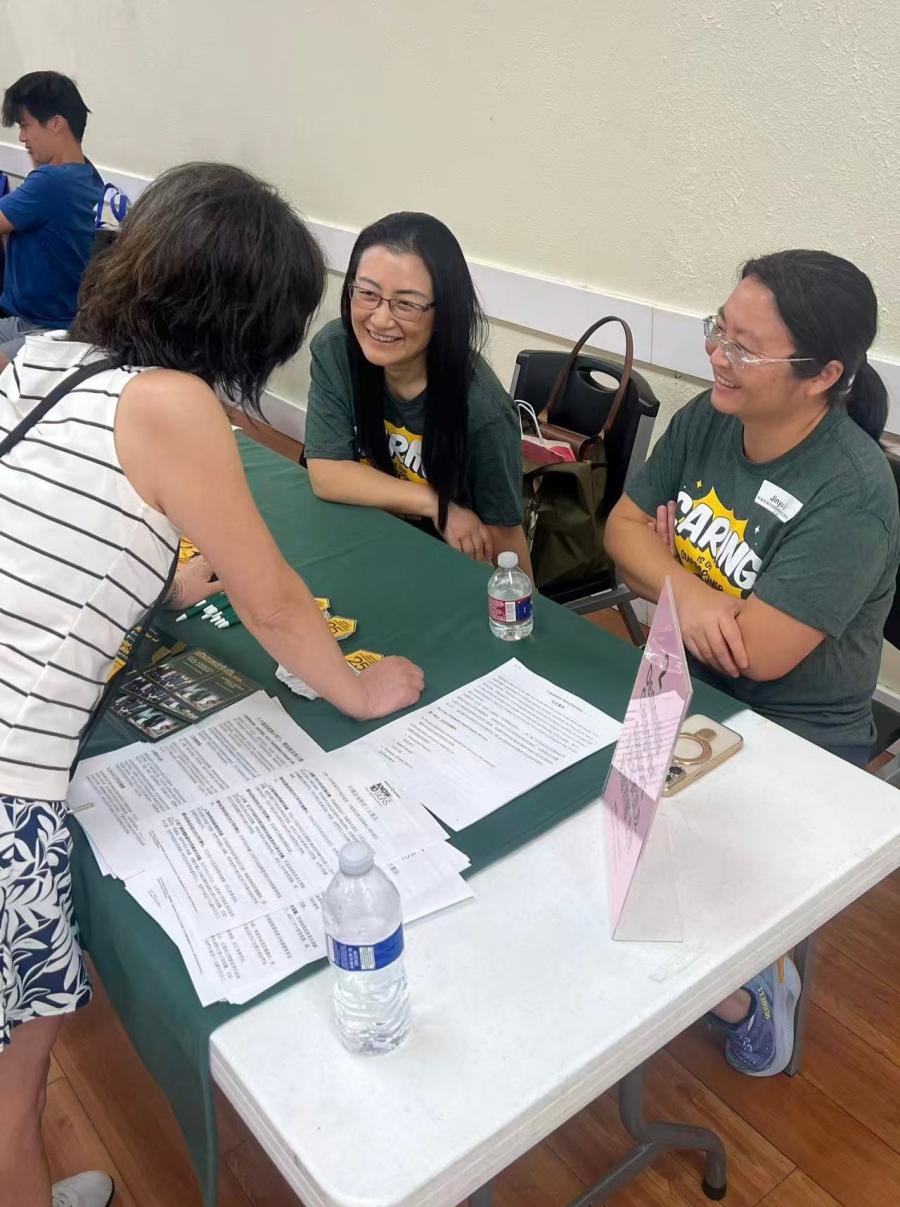
For over a decade, Xu has participated in the DCCC Health Fair, an annual event that brings together Chinese American families and community members. Her relationship with the DCCC began when she first came to Texas and sought to connect with the Chinese American community. Over time, that relationship grew to include guest lectures, family caregiver support and sponsorship of the organization’s youth camp. Since Liu’s arrival at Baylor, the two researchers have presented information on brain health and aging among older adults at the Health Fair for the past three years. Together, they use the event as an opportunity to share their findings while, perhaps most importantly, listening to the individuals they hope their research will serve.
One interaction from this year’s Health Fair particularly stayed with both researchers. A woman and her husband approached Xu and Liu initially with concerns related to cognition. As they spoke with them, however, they began to recognize that the woman’s worries extended beyond memory. The couple had recently moved, and she was experiencing emotional distress, isolation and loneliness. When they asked her about her social life and community connections, they learned that she traveled to Taiwan when she needed mental health counseling. For Liu and Xu, this conversation highlighted a need within the community that extended far beyond their original research in brain health: access to culturally responsive mental health services in local communities. This conversation demonstrated the value of looking at the whole person rather than focusing on a single diagnosis or symptom.
“This is the beauty of our profession,” Liu said.
That same perspective speaks to what Xu sees as the mission of social work and the Garland School.
“One important mission is to serve others and promote human flourishing, this event is just a wonderful opportunity to put those values into practice."
Another touching interaction that particularly resonated with the partners similarly identified another need within the community. Near the end of the Health Fair, a man began sharing his experience as a caregiver to his wife who had died after living with dementia. He did not have a specific question, instead he spent the time thanking the researchers for being there and allowing him to tell his story. For both, this moment became a reminder of just how powerful simply listening can be.
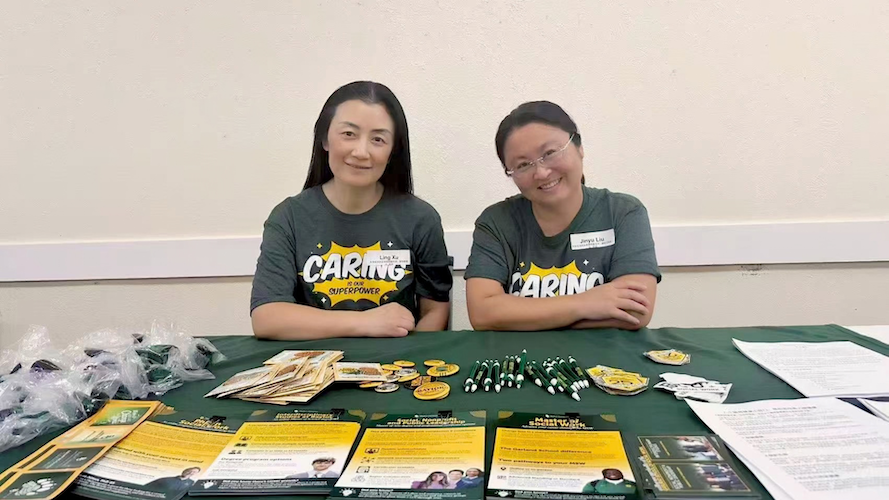
This experience reinforces for Xu and Liu the importance of community engagement for students preparing to become social workers. Both encourage students to get involved in the communities they intend to serve, by volunteering or attending community events. Liu further emphasizes that such events expose students to cultures, experiences, and challenges that may be different from their own. Beyond learning about a community, these individual interactions give students the opportunity to connect directly with the people they hope to serve and develop a deeper understanding of their experiences and needs.
For Xu and Liu, the DCCC Health Fair is ultimately much more than an annual event. It is a continual building of relationships between researchers, educators, social workers and the community. Participating in such an event allows research to be shaped by real experiences and allows individuals to be heard, supported and connected to helpful resources.
“We see the needs in the community, so that motivates us to do more in addition to research.”
Through this ongoing partnership, Xu and Liu reflect the Garland School’s broader commitment to preparing social workers who listen, build meaningful relationships and respond to the needs of the communities they serve. Their work with the DCCC demonstrates how community engagement can strengthen research and bring the heart of social work to life both within and beyond the classroom.